Quartz Countertop | Complete Guide 2026
A quartz countertop is made of 93% natural silica. Silica is the hardest mineral on earth after diamond. That one fact explains most of what makes quartz worth considering.
If you want a kitchen counter that does not absorb tea stains, scratch from a knife blade, or look different ten years from now, quartz is one of the most serious options available. But like anything, there are situations where it is the wrong choice entirely. This guide covers both sides honestly.
What Is Quartz and How Is It Made?
Quartz is an engineered stone, not a natural one. It does not come from a quarry. It is manufactured in a factory.
The composition is straightforward: 93% natural silica particles, 7% polymer resin, and pigment. The raw materials are compressed under very high pressure in a vacuum environment. This process leaves no pores in the stone's structure. That "zero porosity" is where most of quartz's properties come from.
People often call it "artificial stone." That is not accurate. With 93% natural mineral content, quartz belongs to the engineered stone category. Totem, produced in Isfahan, uses the Breton line from Italy and manufactures slabs up to 300 by 140 centimeters.
> Engineered quartz is made from 93% natural silica and 7% polymer resin, compressed under high pressure in a controlled vacuum environment.
Why Has Quartz Become the First Choice for Iranian Kitchens?
There are a few real reasons.
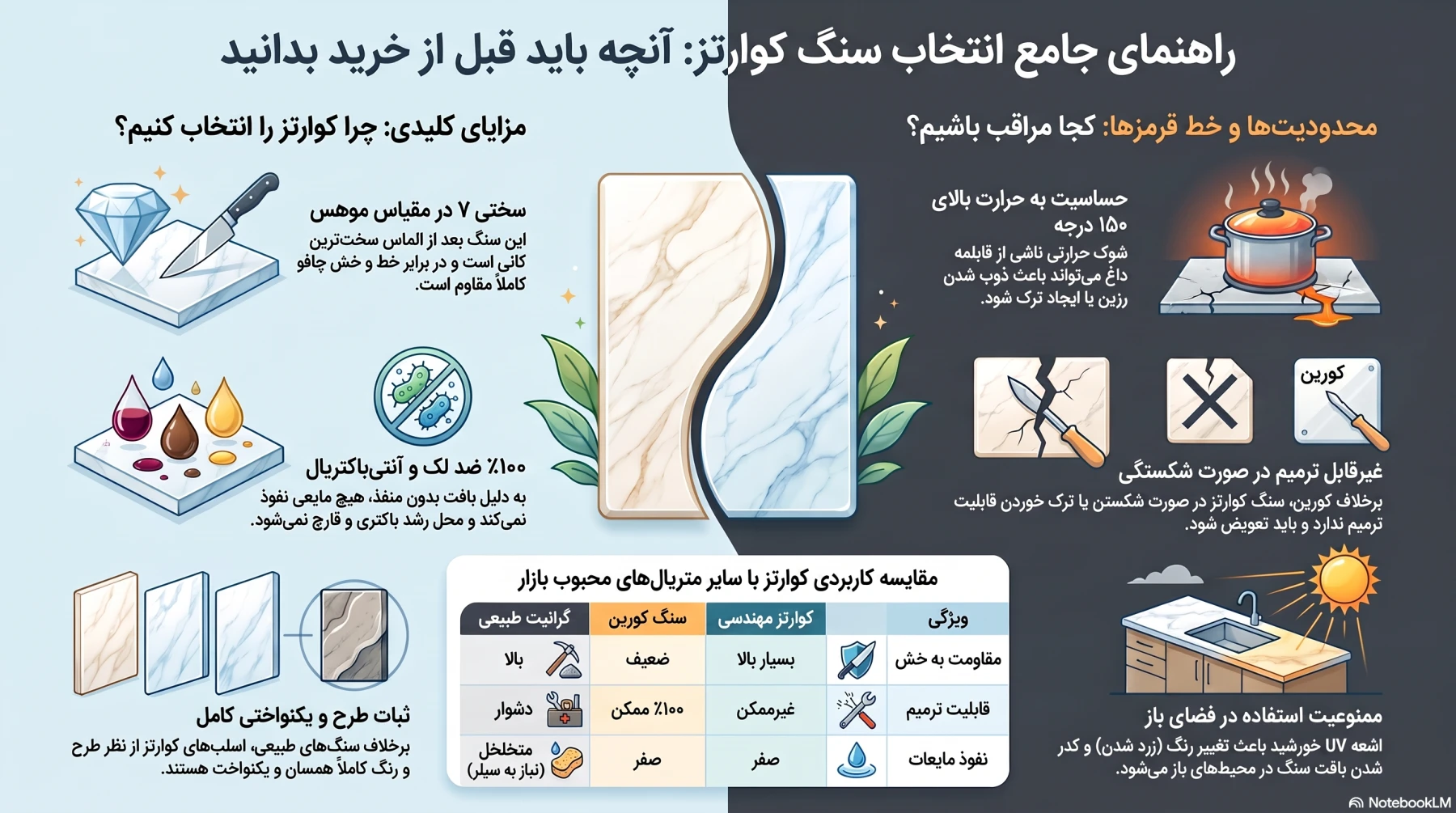
It does not scratch. Quartz has a hardness of 7 on the Mohs scale. A knife blade, keys, even metal cookware cannot leave a mark. For an Iranian kitchen where five meals a day get cooked, that number matters.
It does not stain. Tea, coffee, lemon juice, saffron, olive oil. None of them penetrate. Unlike granite, it does not need annual sealing or waterproofing.
It is hygienic. No pores means bacteria and mold have nowhere to grow. Quartz holds NSF51 certification, which means it meets international standards for surfaces in direct contact with food.
It is consistent. Two slabs placed side by side look exactly the same. That never happens with natural stone. For larger projects where uniformity matters, this is a real advantage.
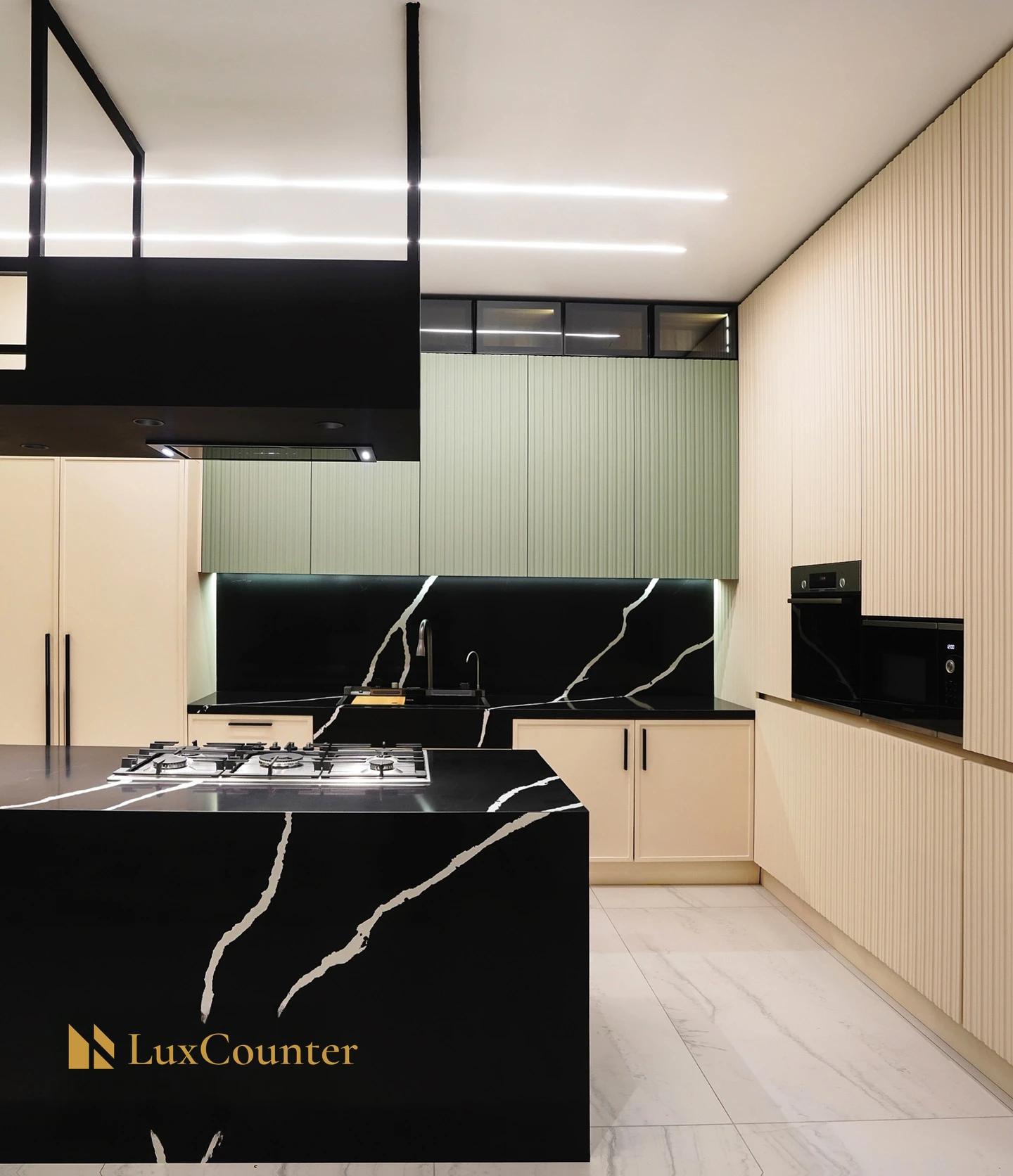
It comes in a wide range of colors. White, gray, black, cream, veined patterns similar to marble. Mirror and glitter finishes also exist, which cannot be found in natural stone.
You can also read our [Guide to Corian Countertops] for a direct comparison.
The Downsides of Quartz Nobody Mentions
Quartz is not perfect. It has a few real limitations.
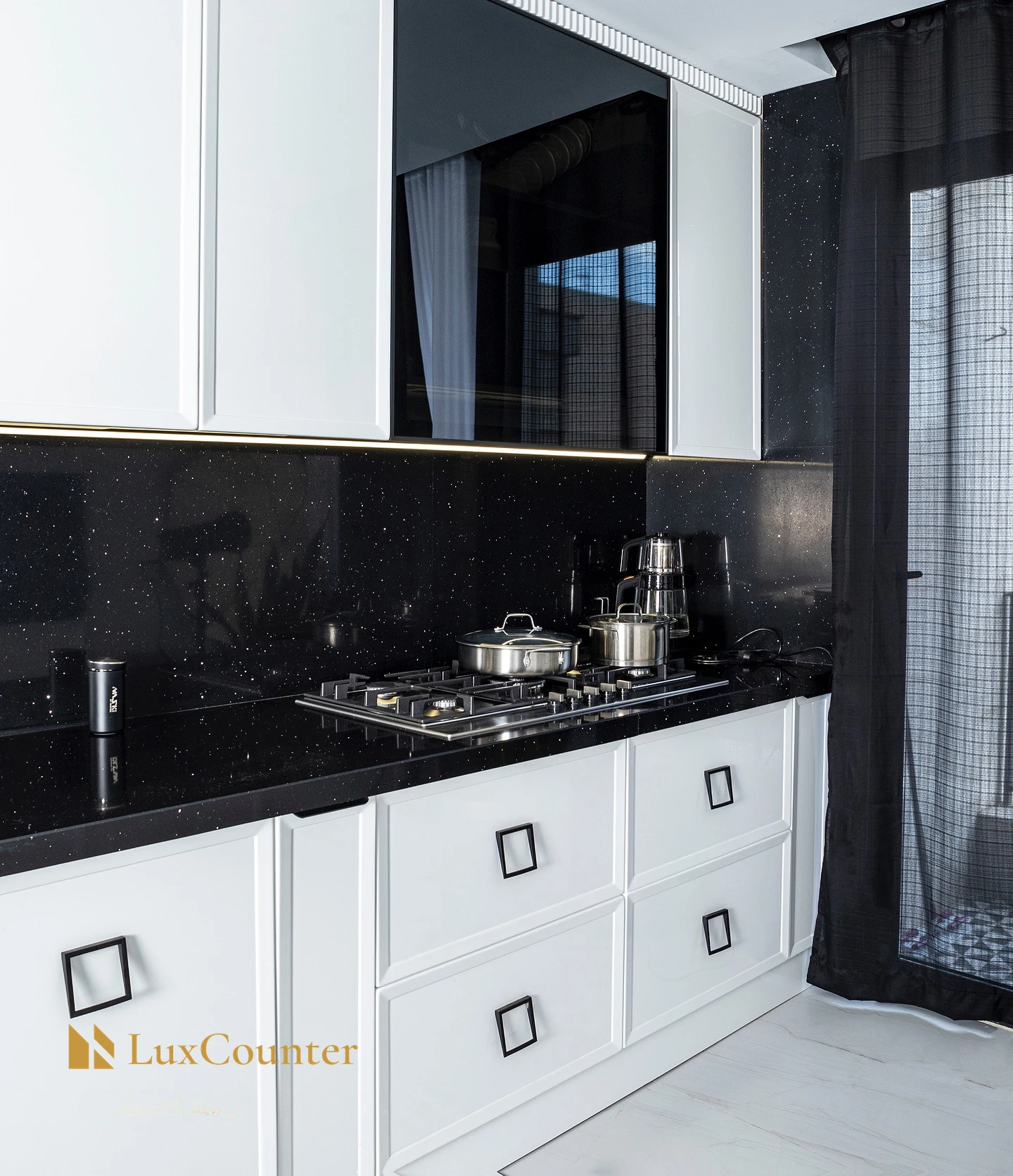
Do not place a pot directly from the stove onto the surface. Quartz can handle up to 150°C, but sudden thermal shock can melt the resin or cause a crack. Use a trivet. Always.
It is also weak against sustained sunlight. The resin in quartz oxidizes under UV, turning yellow and cloudy. This is why it is not suitable for outdoor use.
It is heavy. Do not install it on weak cabinetry. Substructure using MDF or plywood with a 10 by 2.5 cm cross-section is required. Overhangs of more than 15 cm need metal support brackets.
Most importantly: if quartz breaks or cracks, it cannot be repaired. Know this from the beginning. Unlike Corian, which can be sanded smooth, damaged quartz has to be replaced.
> Quartz is vulnerable to direct heat above 150°C and prolonged UV exposure, and cannot be repaired if it cracks or breaks.
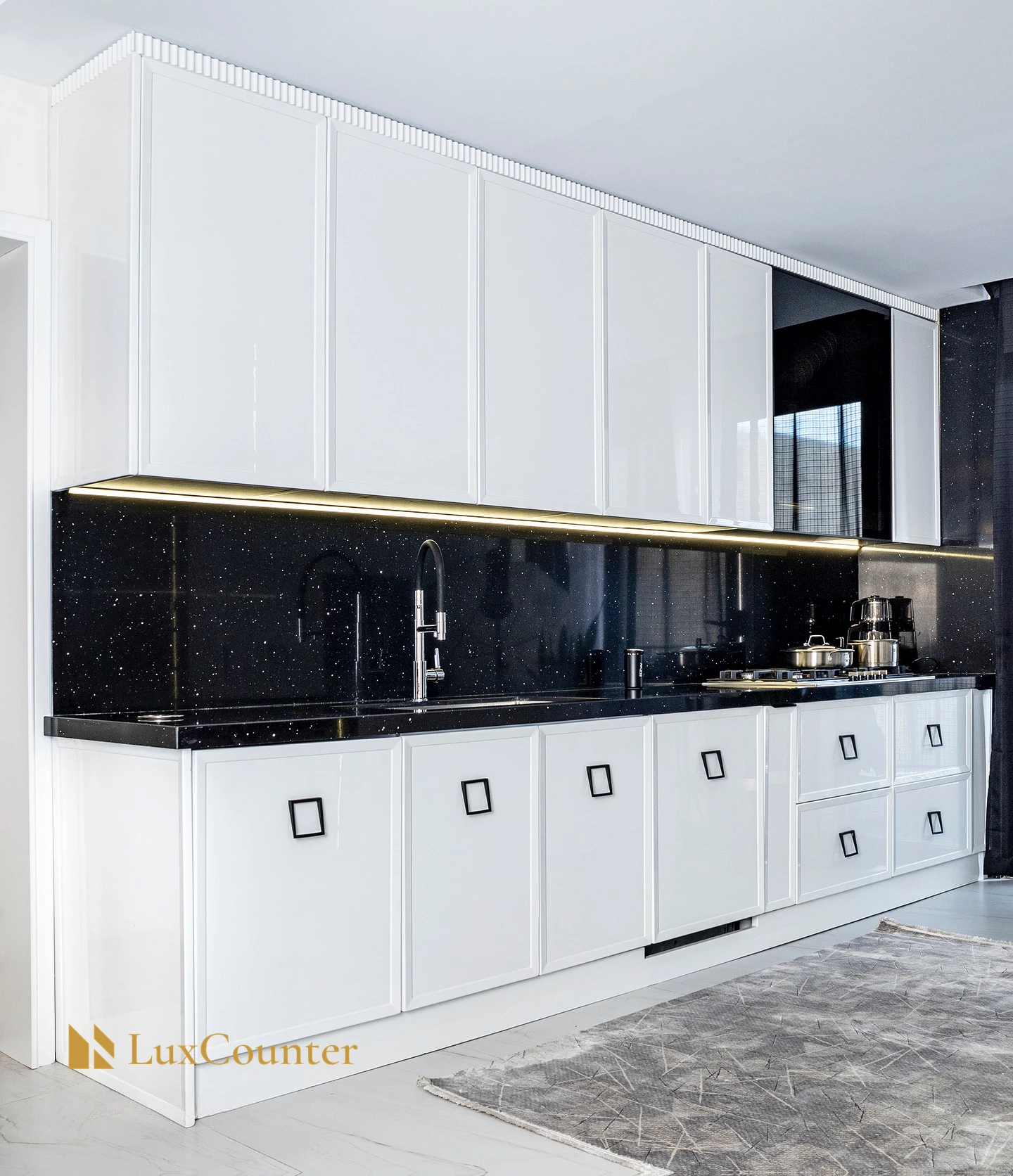
Where You Should Not Use Quartz
In every consultation, LuxCounter checks for three situations before anything else.
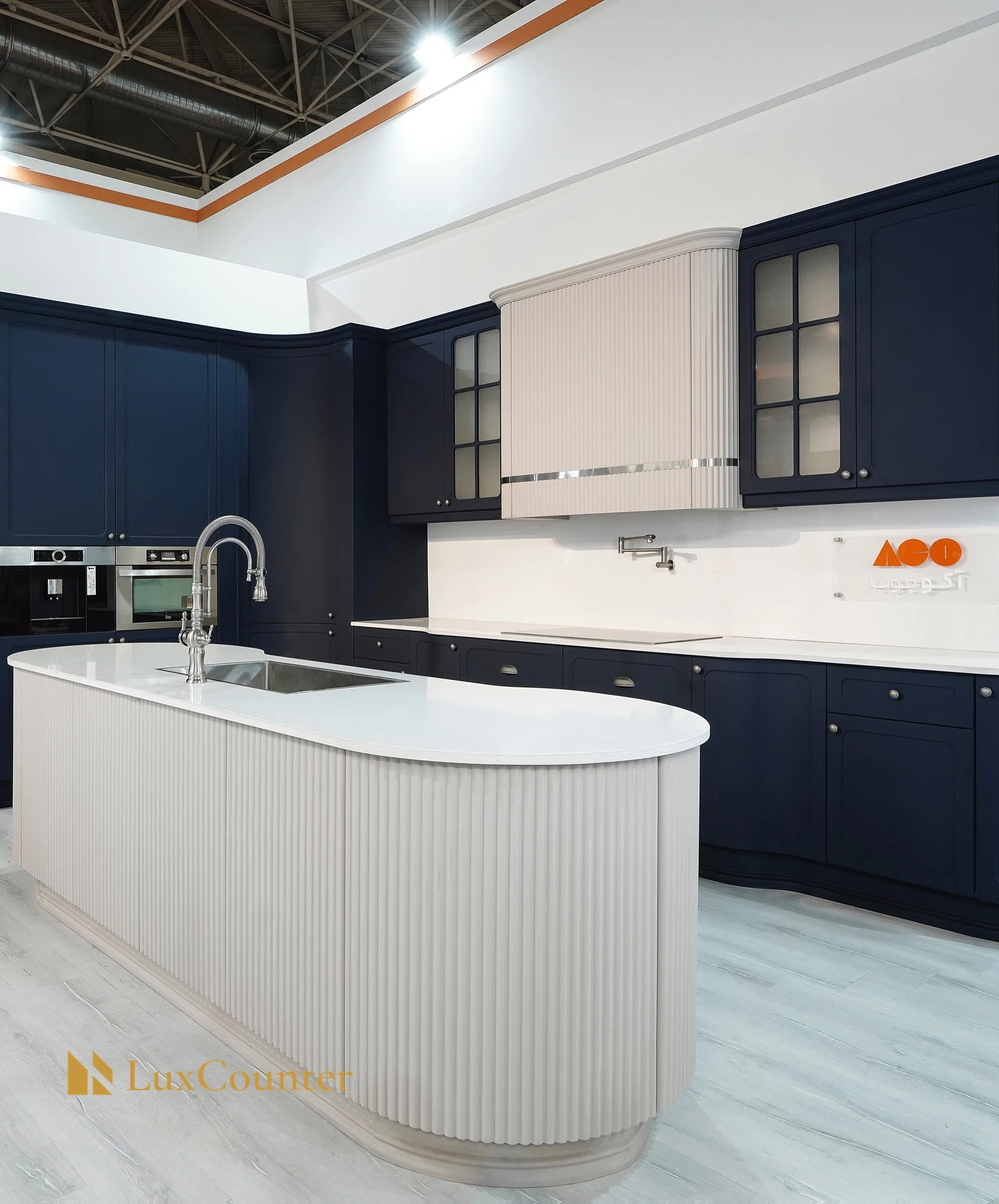
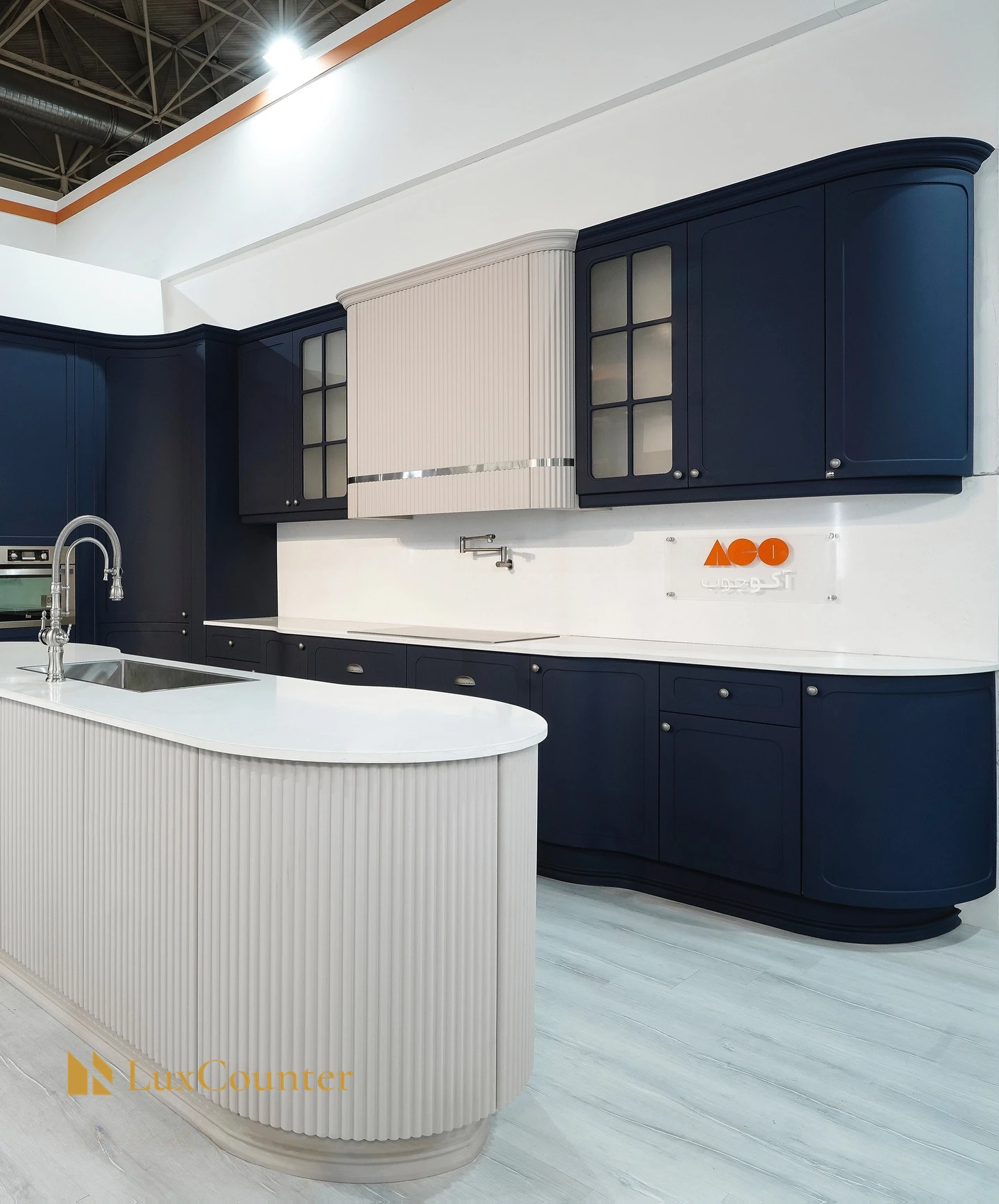
Curved designs. Quartz does not bend. If your design includes curved edges, arched forms, or organic shapes, quartz is the wrong material. Corian is formed on site and can execute those curves without seams.
Outdoor spaces. A villa kitchen, a balcony, an open-air restaurant, anywhere sunlight hits the surface directly. UV will break down the resin.
Dimensions larger than a slab. A standard quartz slab is 300 by 140 cm. If your counter runs longer than 3 meters or wider than 140 cm, a seam is unavoidable. If you need a fully seamless surface, Corian is the answer.
> Quartz is not suitable for curved designs, outdoor spaces exposed to UV, or seamless surfaces larger than 300×140 cm.
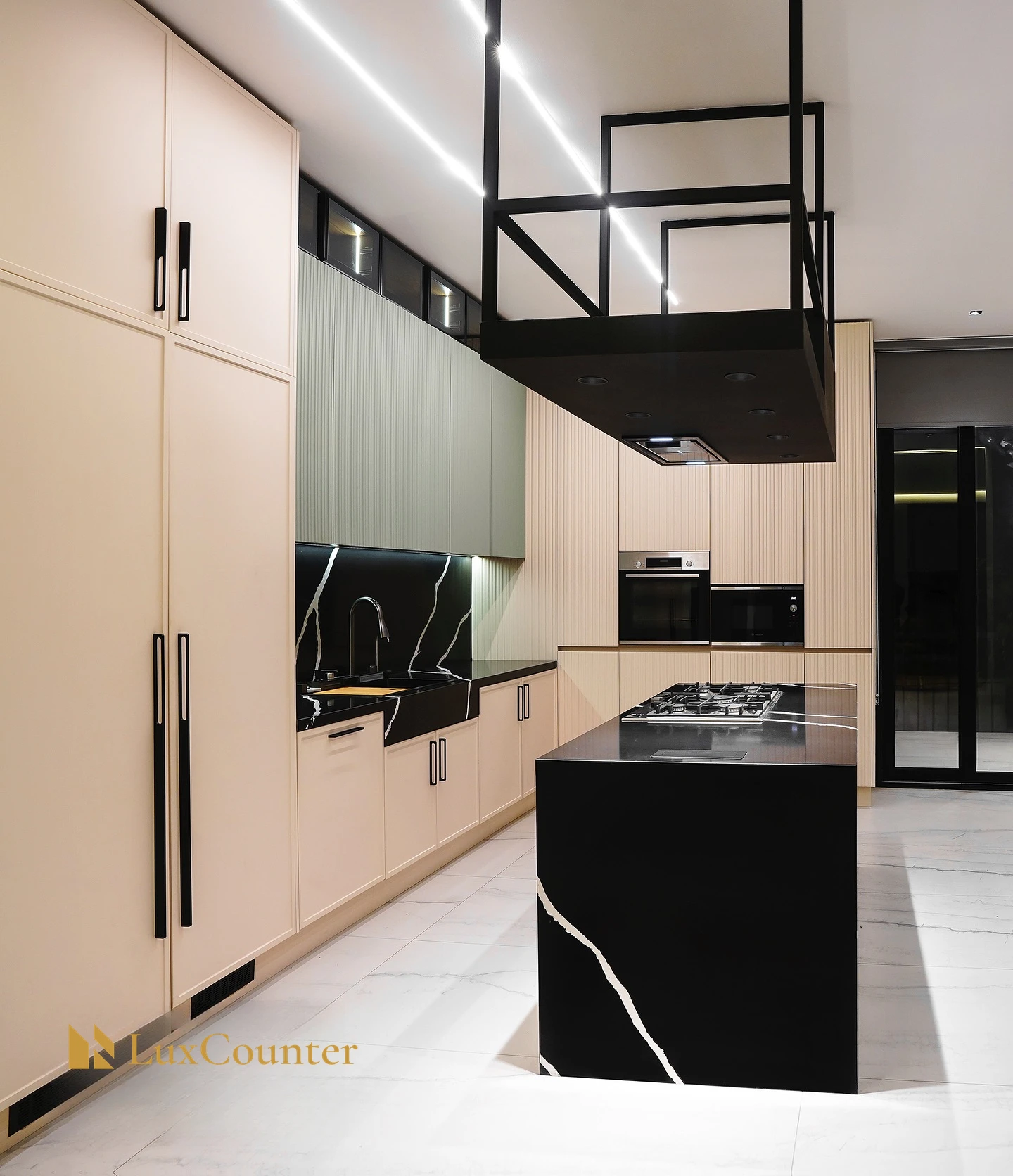
18 Years on the Job — An Honest Observation
After 18 years installing countertops, one thing has become clear about quartz: when the job is done, the LuxCounter team leaves with confidence. When a client calls three years later, it is usually to refer a new project, not to report a problem.
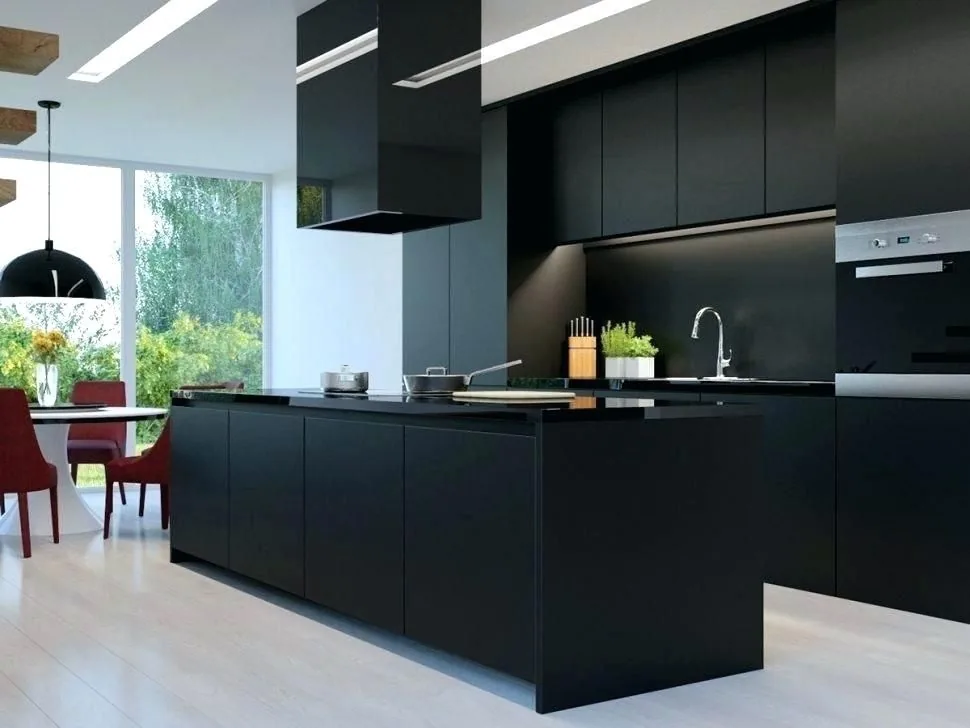
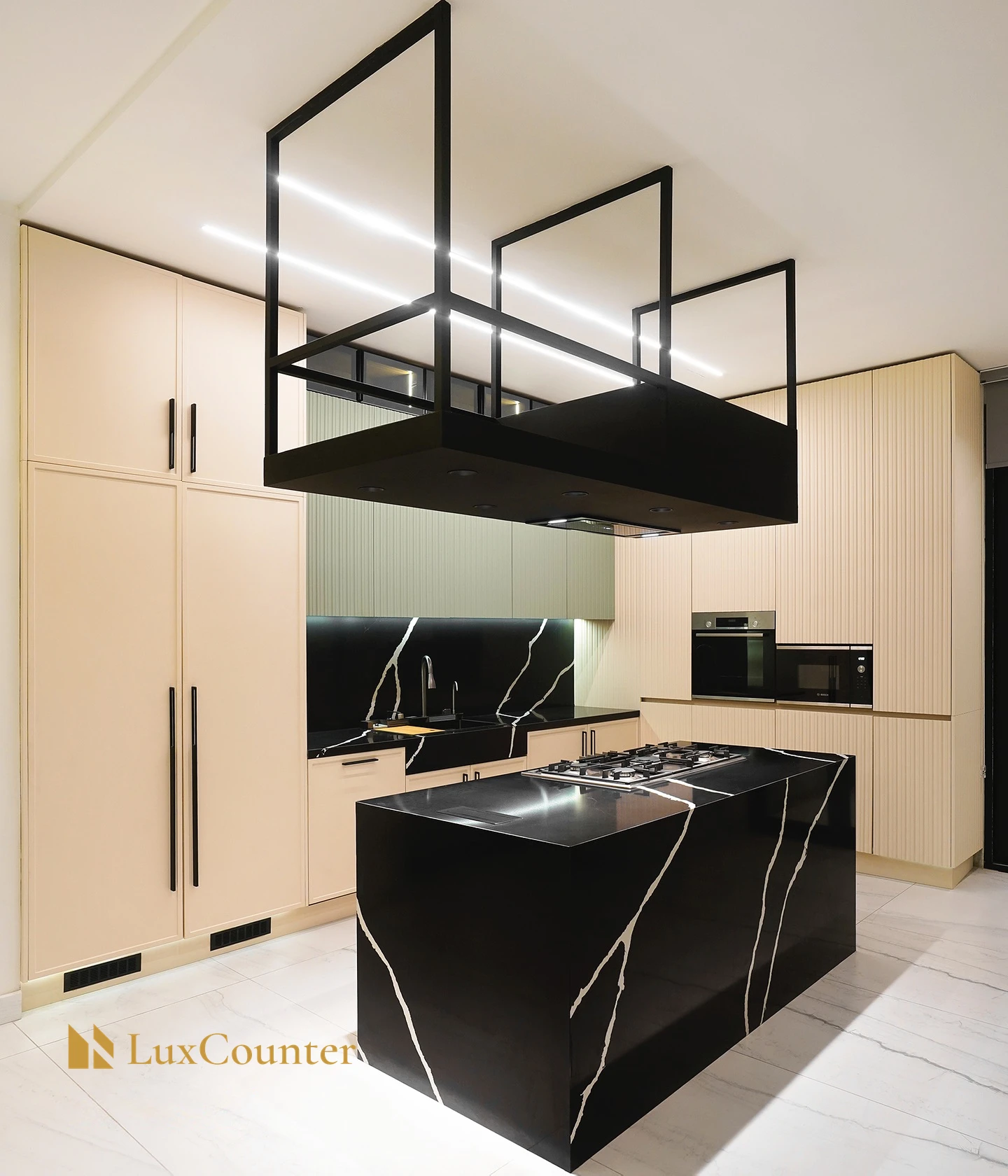
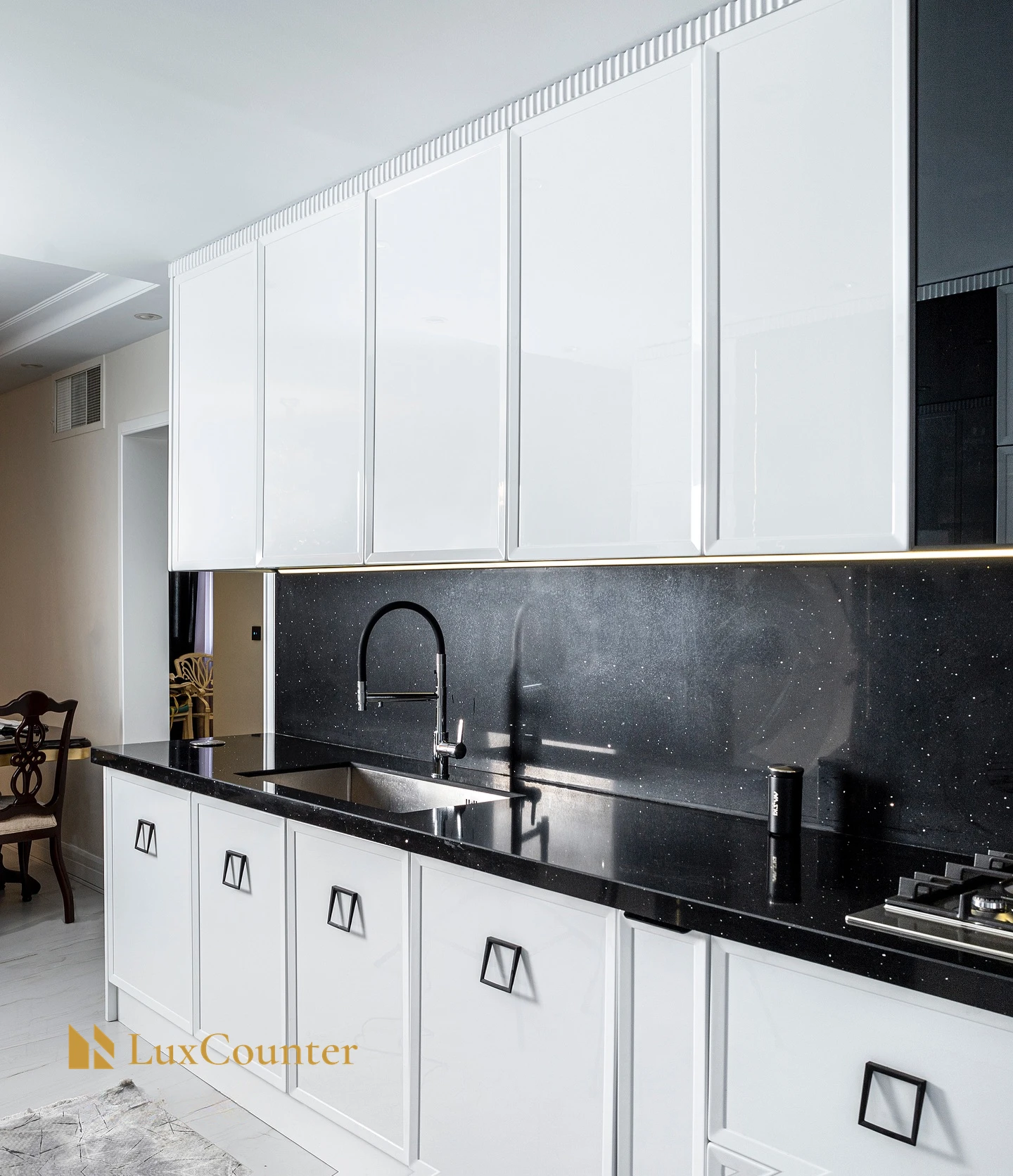
The best results have consistently come with black. Black quartz hides wear, stays uniform, and looks the same a decade later. For anyone who wants a black counter, quartz is the first recommendation.
One thing that always gets said honestly: if this stone breaks, it cannot be fixed. In 18 years, it has been a rare event, but you should know it upfront. The problem is almost always a weak substructure or a direct impact, not the stone itself.
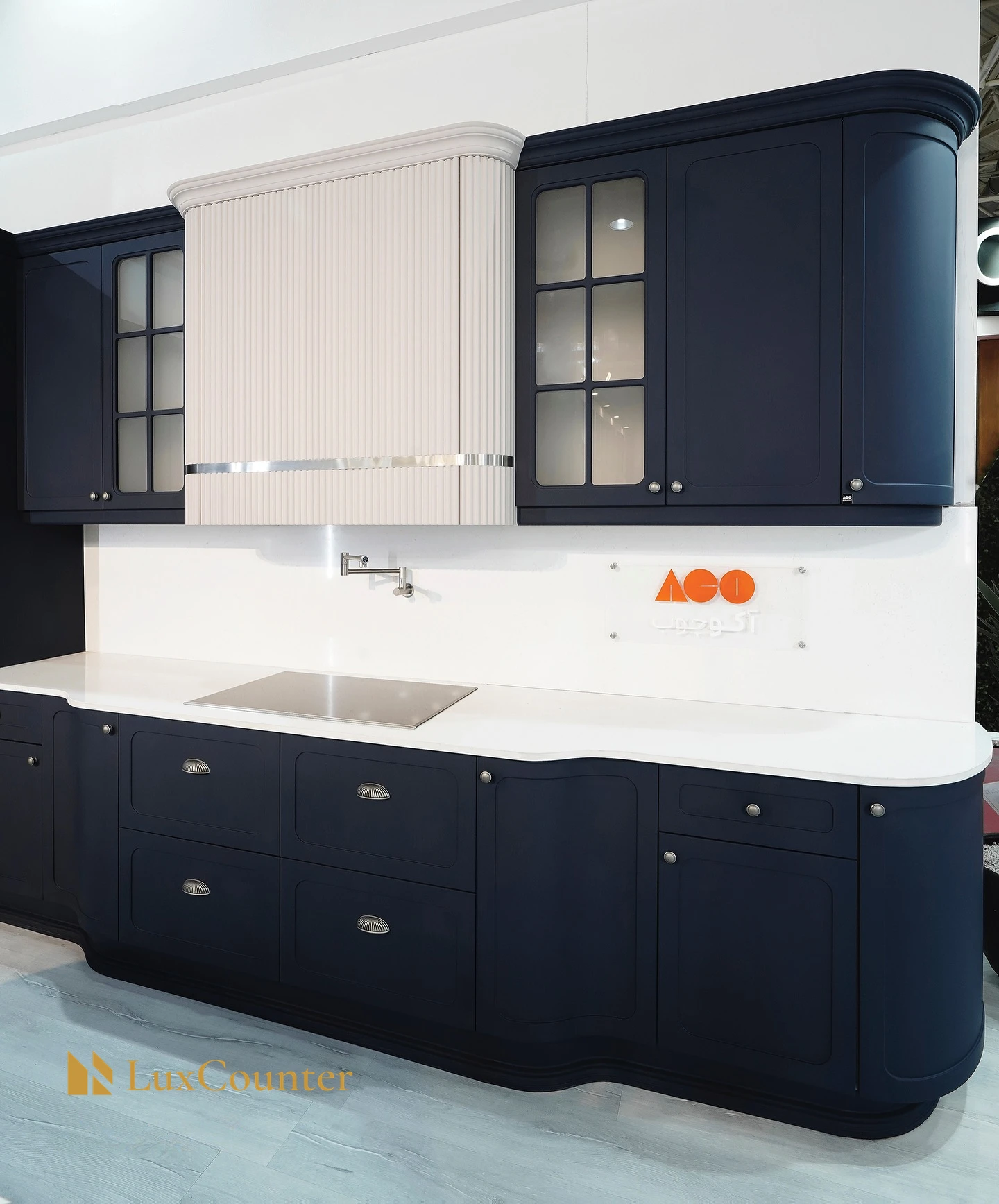
Quartz Brands Worth Knowing
Totem and Kindstone — Two Iranian Brands LuxCounter Works With
Totem is produced in Isfahan using the Breton line from Italy. It has a barcoding and grading system, from grade 1/1 to 2/3. Ask for the grade on the purchase invoice.
Kindstone is another Iranian brand with a strong range in black and veined finishes.
Both are featured with real photos on the LuxCounter website:
Other Iranian Brands
Several other Iranian brands exist in the market. Quality varies. Always ask for the slab grade before buying.
International Brands
Caesarstone from Israel, Silestone from Spain, Cambria from the US, Radianz from South Korea. Quality is high, but import costs and exchange rates make them significantly more expensive. None of them offer official warranty coverage in Iran.
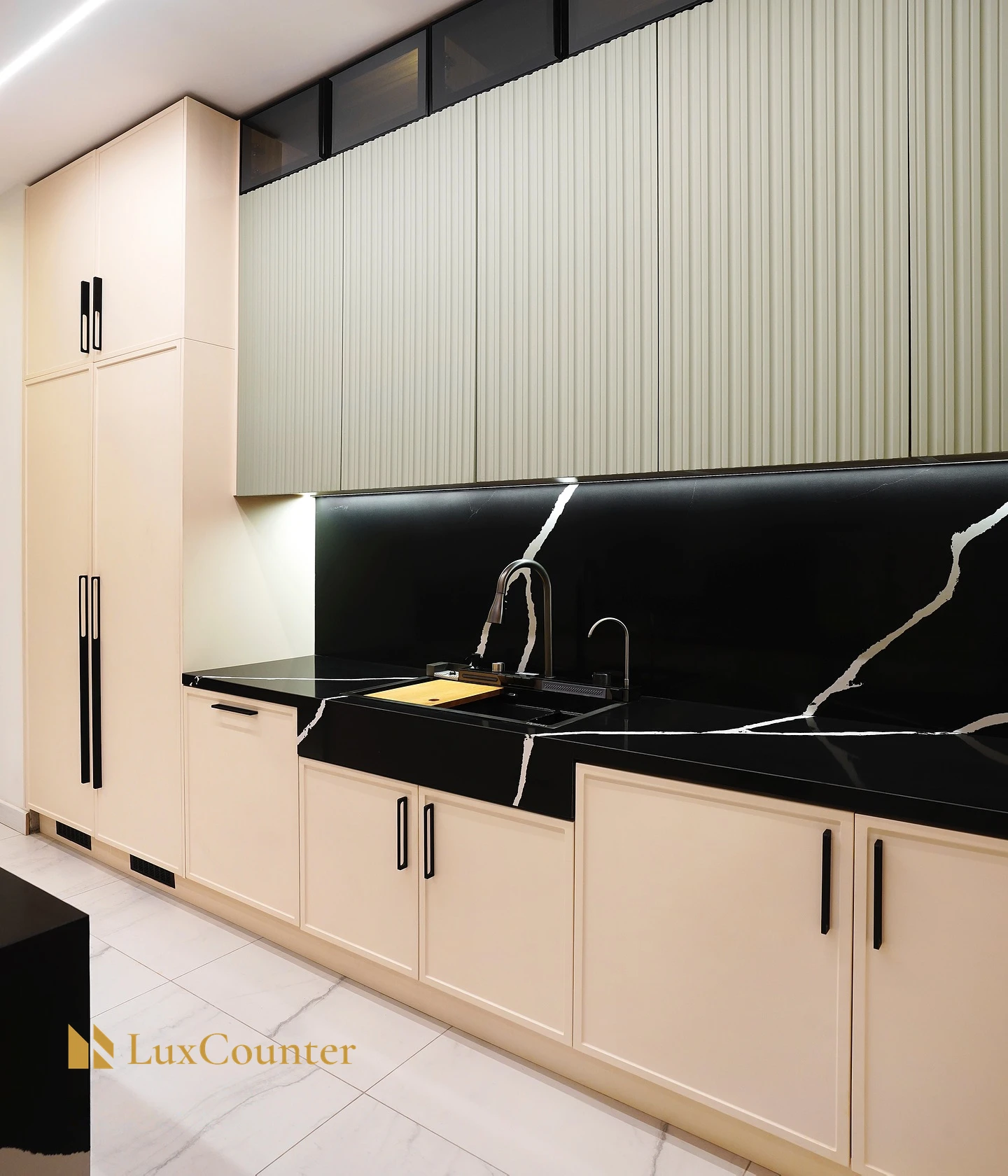
Quartz Colors and Patterns
Quartz has the widest range of colors and patterns among countertop materials.
The main colors in the market: pure white, milky white with fine veining, light gray, dark anthracite, solid black, black with gold veining, cream, and beige. Patterns range from solid matte to marble-like veining, cloud patterns, and glitter finishes.
One important difference from natural marble: veined quartz patterns are uniform. Two slabs placed next to each other look exactly alike. That never happens with natural marble.
Quartz vs. Corian vs. Granite
Quartz when scratch resistance and hygiene are the priority. Corian when you have curved designs, want no seams, or need dimensions beyond a standard slab. Granite when you want fully natural stone and the surface is outdoors.
Quartz Countertop Pricing
LuxCounter does not publish fixed prices on this page. Not to avoid the question, but because a fixed number in this market is misleading.
Quartz pricing is tied directly to exchange rates, raw material costs, and import conditions. A number that is accurate today may be wrong next week. What is more useful is understanding what affects the price:
Brand and origin make a significant difference. Veined patterns cost more than solid matte. 20mm thickness costs more than 12mm. Edge profiling adds separate costs. Installation and framing are quoted separately.
For an accurate price for your project today, contact LuxCounter. Share the dimensions, pattern, and installation conditions, and you will get a real number.
How to Spot Genuine Quartz
A few straightforward things to check.
The surface should be completely flat. No bubbles, pits, or raised spots. Thickness should be exactly 12 or 20mm. Anything less means reduced flexural strength.
Ask for a written warranty. A brand that does not offer one is a brand you should not trust. With Totem, the slab grade appears on the invoice. Request it.
There is also a simple test: drag a key across a corner of the sample. Genuine quartz does not scratch. If it does, the sample has too much resin and too little silica. That same stone is a risk under heat.
Maintenance
For daily cleaning, a microfiber cloth with warm water and a few drops of neutral dish soap is enough. That is all.
A few things to avoid: concentrated bleach, paint thinner, acetone, and drain cleaners all damage the bond between silica and resin. Steel wool is also off-limits. For dried stains, soften first with warm water, then lift with a plastic scraper. And always use a trivet.
More detail: [Countertop Maintenance Guide]
Frequently Asked Questions
Is quartz suitable for an Iranian kitchen?
Yes. Spice stains, pickle brine, and tea do not penetrate it. For Iranian cooking, which involves heavy use of oils and colored spices, it holds up well.
How long does quartz last?
With proper care, 15 to 20 years and beyond. Avoiding direct heat and harsh chemicals is the main factor.
Can you put a hot pot on quartz?
No. Direct heat above 150°C can melt the resin or cause cracking.
Can quartz be repaired if it breaks?
No. Unlike Corian, which can be sanded and polished back, cracked or broken quartz has to be replaced.
What is the difference between Iranian and imported quartz?
Totem and Kindstone use current manufacturing technology and deliver acceptable quality. Imported brands cost significantly more and do not offer official warranty coverage in Iran.
How much does quartz countertop cost per square meter?
It depends on brand, pattern, and thickness, and fluctuates with the market. Contact LuxCounter for today's pricing.
Is quartz suitable for curved countertop designs?
No. Quartz cannot be bent. For curved forms, Corian is the right material.
Summary
For high-use indoor spaces, quartz is one of the most reliable countertop options available. It does not scratch, does not stain, is hygienic, and looks the same years from now. Its weaknesses are real too: it is vulnerable to direct heat and UV, it cannot accommodate curves, and it cannot be repaired if it breaks.
If those limitations do not conflict with your project, quartz is a solid choice.
For a free consultation and an accurate price for your project, get in touch with LuxCounter. Eighteen years of installation experience means we know what holds up and what does not.